Audio Session Capture and Logging (Module)
Supporting component within the Independent Governance and Release System, applied to session based audio recording. Parent case study: Independent Governance and Release System.
This module focuses on a simple truth. If capture is not structured, everything downstream becomes harder. In audio work, that shows up as take confusion, missing context, and exports that are difficult to compare across revisions. Even when the creative decisions are strong, the production line can collapse if session state is not legible.
Production Context
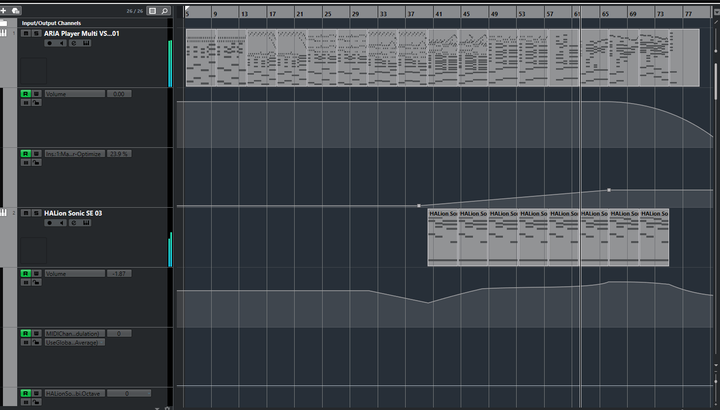
The sessions being captured are MIDI based compositions built through iterative development: piano or harmonic sketches expanded by layering orchestral sections, shaping dynamics, and refining structure over time. Work is driven by performance and iteration, not based on loops or templates. Compositions evolve through live MIDI performance, manual MIDI editing, and repeated listening and restructuring. All work stays in MIDI to preserve control over performance and orchestration, with velocity shaping, articulation layering, and manual humanization to achieve realism.
Capture Discipline
I treated session capture as a production surface. The structure is lightweight by design, but intentional. Consistent session templates, predictable naming, and export discipline create stable reference points without slowing momentum. The goal is to preserve creative flow while keeping the work retraceable. The capture discipline exists so that this iterative, layered process remains retraceable across takes, revisions, and collaborators.
The result is fewer resets and safer iteration. Rework stays bounded because you can see what changed and why, and exports remain comparable across cycles. This also supports long tail release governance, because capture outputs arrive already organized instead of being reconstructed later under deadline.