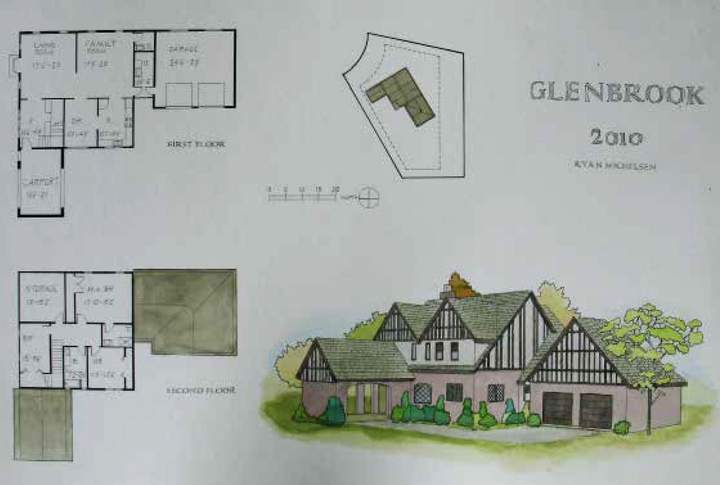
I went through a multi-year architectural CAD and drafting track: CAD 1 through CAD 3, then two honors-level studio courses. Every major project had to ship as both a hand drawing set and a digital drawing set. Review used the same drafting and documentation standards you would expect on production work: title blocks, dimensions, notation, and views that matched across sheets.
Focus
CAD layout discipline and site build
Constraint
Precision under production conditions
Method
Structured layout and build sequence
Tools
CAD, documentation, site process
Introduction
The program was technical. Each level asked for faster turnarounds, fuller drawing packages, and review where you had to defend layout decisions on the wall. We used 3D for massing and study, but what actually got graded was documentation. That meant something an instructor could mark up, plot, and return with a clear list of fixes.
Hand drawing and CAD ran in parallel. The same scheme often moved from board to file or back again: lettering and line weight on vellum, then layers, sheets, and revisions in CAD. When the plan and section disagreed or the dimension chain broke, it showed up in both. That pushed layout discipline and got me in the habit of checking related views before the next review.
Instructional responsibility
Senior year I was a teacher’s assistant in the same program. I was not teaching the class. I graded to drafting standards, helped keep things moving (materials, plot handoffs, day-to-day studio logistics), and worked with classmates on layout, dimensioning, and documentation. I could point to what failed the rubric without drawing their sheets for them.
I spent a lot of time on the other side of review: what makes a sheet pass, what makes it fail, and how to say that in plain terms. Same standards and markup habits you would use on real job sets, just spread across a room of student work instead of only my own.
Grading: Checked submissions against the program criteria: complete sets, readable notation, solid dimensions, plan/elevation/section agreement.
Classroom support: Plot queues, file drop patterns, materials, and the small routines that let instructors actually teach during blocks.
Peer troubleshooting: Layer issues, view alignment, documentation gaps. Specific feedback, tied to the standard, without taking over their work.
That year shifted the focus. Less time thinking only about finishing my own drawings, more time judging other people’s against a fixed bar. By the end I was comfortable working at the evaluation level of the same technical work I had been producing.
Key projects
Two pieces of work carry most of the story. A 2010 residential proposal: full presentation package plus a physical study model. Then a 2020 drawing where I revisited the same house on my own terms. The second one matters because it happened long after the formal sequence ended, without starting over from scratch.
2010 Proposal
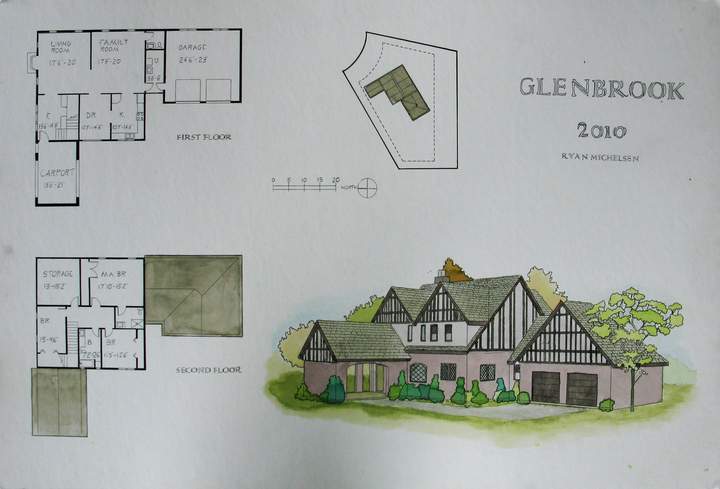
Requirements. Two-story residential layout with a carport entryway, built under the assignment constraints: program, circulation, review on a schedule. The work was to keep layout decisions aligned across views so the building read as one scheme, not a loose sketch.
Presentation package. The capstone was one finished presentation sheet (first image below), not a pile of rough studies. It combines a hand-drawn perspective on site with drafted, watercolored floor plans for both levels in a single watercolor sheet. The perspective, plans, and treatment had to read as one piece for pin-up.
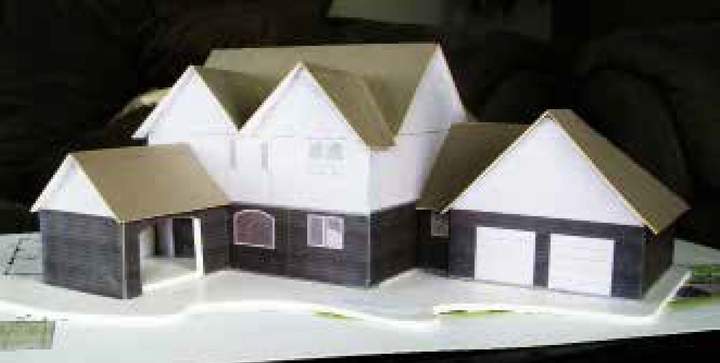
Model. I built a foam-board site model from elevations plotted out of CAD for faces and openings, with simple vegetation on the base. I left Tudor-style beamwork off so the study stayed about massing, entry, and how the drawing set turned into something you could walk around.
After the assignment. I tried an upgrade with a stairwell study tower on the side of the house opposite the carport. Same general footprint idea, more program. That line of thinking shows up again in the 2020 drawing.
Full proposal drawing: hand perspective on site, drafted and watercolored floor plans (two story, carport entry)Scale model: foam board and CAD elevation prints, vegetation (Tudor beamwork not modeled)
2020 house concept (personal iteration)
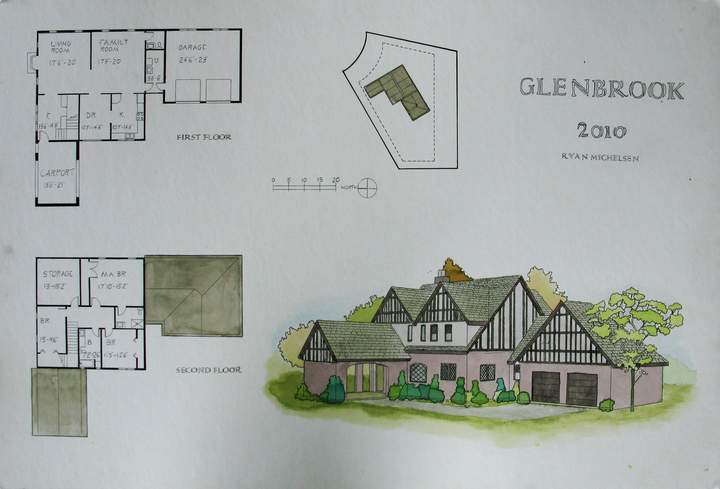
Deliverable. Years after the 2010 assignment, I drew the same house idea again as a standalone sheet, but on my own layout and massing choices instead of the original brief. It includes the stairwell study tower opposite the carport and other changes that reflected what I wanted to explore, not what the rubric asked for.
No retraining. I did not take a refresher class first. File setup, sheet habits, and drafting judgment came from the original track. I did not have to relearn the basics.
House concept, 2020 version (personal iteration from the 2010 proposal)
What it shows. The skill was not a short-term thing. The drafting logic and system habits stuck.
CAD final project: model and plan sheets
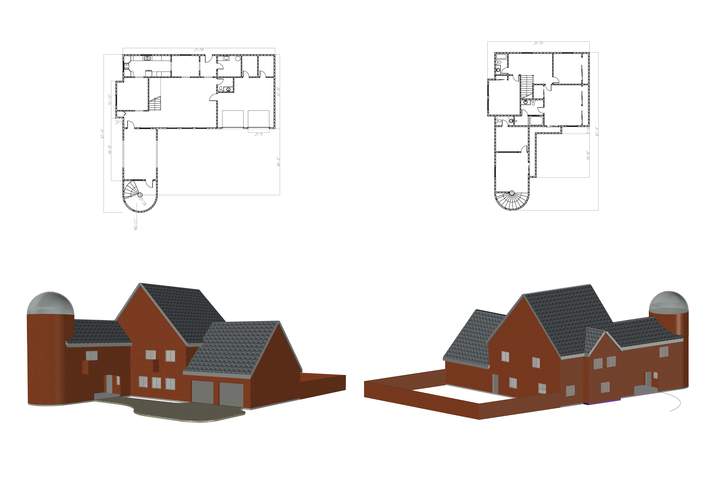
Deliverables from the CAD capstone track: digital model views and plotted plan documentation produced under the same sheet, layer, and notation habits as the rest of the program.
3D model (final project)Plan sheet (final project)
What this trained me to do
Turn requirements into a structured drawing set someone else can follow, mark up, and plot.
Produce documentation that survives review and handoff: dimensions, notes, and sheet logic that still make sense when you open the file later.
Hold hand drawing and CAD to the same standard. Same layout intent in two media. A gap in either one means rework.
Read plans and sections as functional decisions: circulation, enclosure, massing, not just lines on a screen.
Work inside fixed rules without losing judgment. Program and code-style constraints still leave real layout choices.
Application beyond CAD
There was also real physical translation. I plotted elevations to build a model. Dimensions had to match what foam and mat board could do. That lines up with Manufacturing and shop fulfillment: the file and the part either match, or work stops.
This is not a claim to professional architecture practice. It is background: solid drafting habits and layout discipline that still shape how I prepare production files, check related views, and hand work off clearly.